By: The NHLCA Team
For most of the year, coaches are locked into their team and the task at hand. With that comes challenges, goals, and the pressures that come with them. There is rarely time to look up.
But coaches at every level of the game share a common goal: the desire to become better at what they do.
That desire is what connected more than 700 coaches across two weeks in June and two distinct experiences that together made up the 2026 NHLCA Global Coaches’ Clinic, presented by Catapult.
The Clinic opened on June 4-6 with 15 virtual Keynote Presentations that brought coaches together from around the world, making it a truly global coaching experience with the flexibility to watch from anywhere in the world. The presenting lineup featured NHL and AHL Coaches from across the game, including Head Coaches, Assistant Coaches, Goaltending Coaches, and Video Coaches, alongside additional industry leaders.
The lessons shared during those Keynotes were immediate and applicable. Coaches watched hockey leaders break down drills, systems, video analysis, and player development, providing practical tools they could bring back to their teams and implement ahead of the upcoming season.
Among the many key takeaways for coaches shared throughout the Keynotes was the importance of preparation, a theme highlighted by Keynote Speaker Jim Montgomery, Head Coach of the St. Louis Blues.
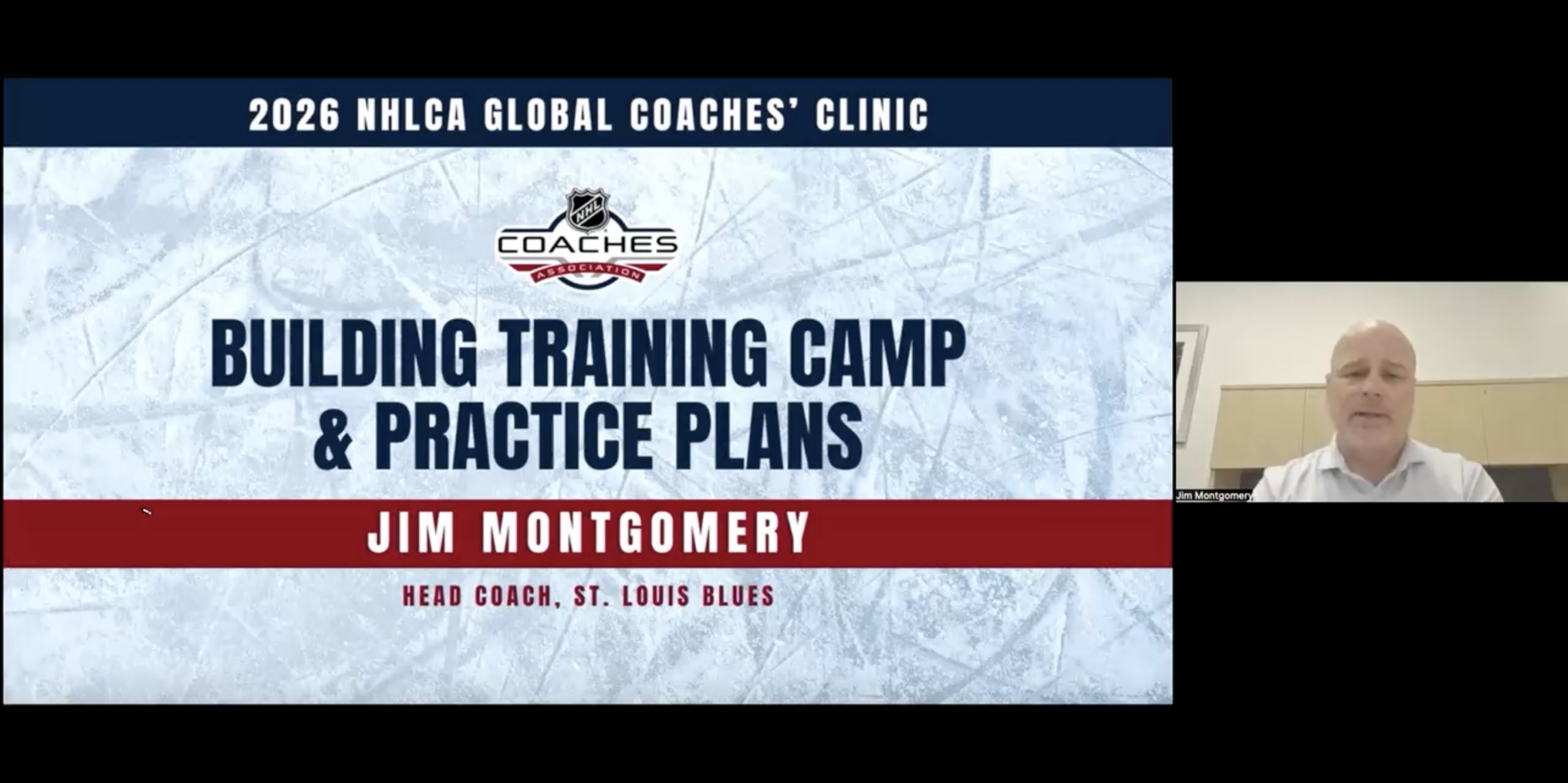
Photo: Jim Montgomery, Head Coach, St. Louis Blues
“The one thing I wanted most people to take away from my presentation on training camp is the need to prepare your team to practice the way you want them to play. And how much preparation goes into each drill and the detail needed to get your team to have the habits needed to have success come game time,” shared Montgomery.
That emphasis on practical application resonated with attendees throughout the virtual Keynote Presentations.
“A great takeaway was the tactical element of tracking, which ran through most of the presentations and was heavily emphasized,” shared one attendee. “Another key point was the preparation for and execution of the interview process, led by Joel Quenneville, Head Coach of the Anaheim Ducks.”
The value of those presentations often came down to the details.
“Jaroslav ‘Yogi’ Svejkovsky, Assistant Coach of the Philadelphia Flyers, gave an outstanding presentation,” shared another attendee. “Every small detail he shared, and the way he showed us how to integrate that information into our daily practices, was incredibly valuable.”
The exchange of useful, actionable ideas remained a constant throughout the Clinic. Every attendee also received a digital copy of the 2026 NHLCA Drill Book, powered by CoachThem, featuring more than 100 drills from NHL Coaches and designed to be adapted at any level of the game.
It is a highly-valued, annual resource that reflects what the NHLCA is built to do: develop coaches, give back to the hockey community, and help grow the game globally.
The exchange of ideas and lessons from the highest levels of the game did not end when the virtual Keynote Presentations wrapped. Instead, those conversations continued as the Clinic shifted to Pittsburgh for its in-person component.
On June 12-13, the Clinic brought the coaching community to one of North America’s most storied hockey cities, creating the rare opportunity to gather some of the game’s brightest minds in one room. The historic Omni William Penn Hotel in downtown Pittsburgh welcomed over 400 coaches from the youth level up to the highest levels of hockey, including dozens of NHL Coaches, for an impactful event full of professional development, networking, and collaboration.
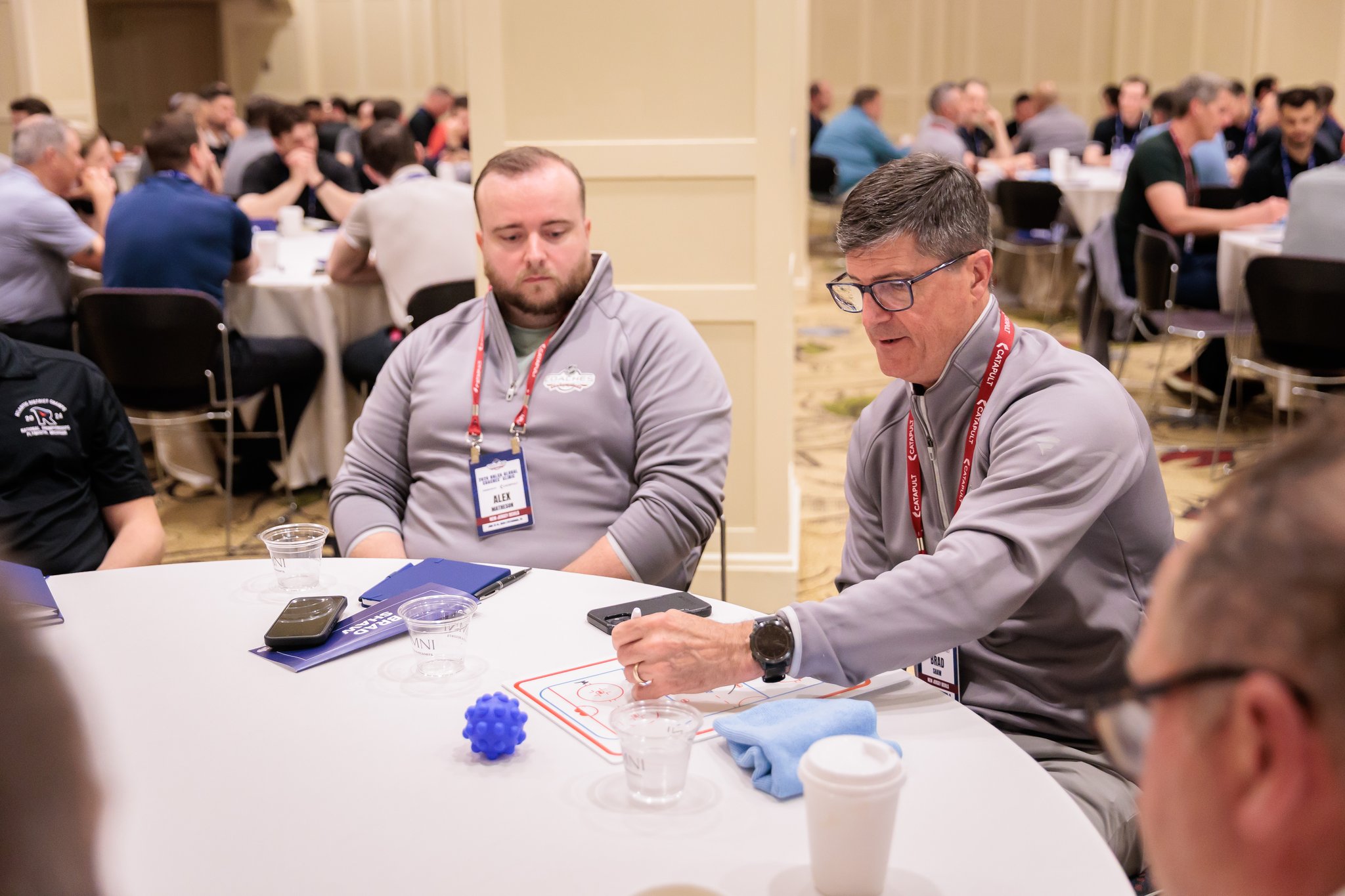
Photo from right to left: Brad Shaw, Assistant Coach, and Alex Matheson, Video Coach, New Jersey Devils.
The cornerstone of those two days was the Small Group Breakout Sessions led by NHL Coaches. Throughout breakout sessions, attendees rotated through small-group discussions with coaches from across the League, creating opportunities for candid conversations, idea sharing, and direct access to perspectives from the highest levels of the game.
The sessions offered something valuable for every coach: access to NHL Coaches who are willing to share their experiences and exchange ideas. The Clinic continued to bridge gaps across leagues, levels, and backgrounds, creating opportunities for coaches to learn from one another in ways that don’t happen anywhere else.
That exchange benefits everyone involved, including the NHL Coaches leading the sessions.
“It’s always enjoyable, and I think it helps my knowledge when I get to talk about so many different elements of the game,” said Brad Shaw, Assistant Coach of the New Jersey Devils.
The impact of those conversations was equally apparent among attendees.
“The breakouts were fantastic, and I thought we had a good mix of coaches who touched on all aspects of the game,” shared one attendee. “Overall, though, the connections made were the most valuable. It’s not often you get to be in a room full of talented coaches like this. It was a great opportunity to meet people in this field and connect.”
The in-person experience was built around face-to-face learning with NHL Coaches and connecting with fellow attendees. Pittsburgh began with an evening Welcome Reception presented by Catapult, where coaches reconnected with their peers, met new faces, and laid the foundation for the discussions that would continue throughout the remainder of the Clinic.
For many attendees, those conversations are a big part of what brings them back year after year.
“I enjoy returning every year to the NHLCA Clinic,” said Jason Payne, Associate Coach of the Green Bay Gamblers and NHLCA BIPOC Coaches Program member.
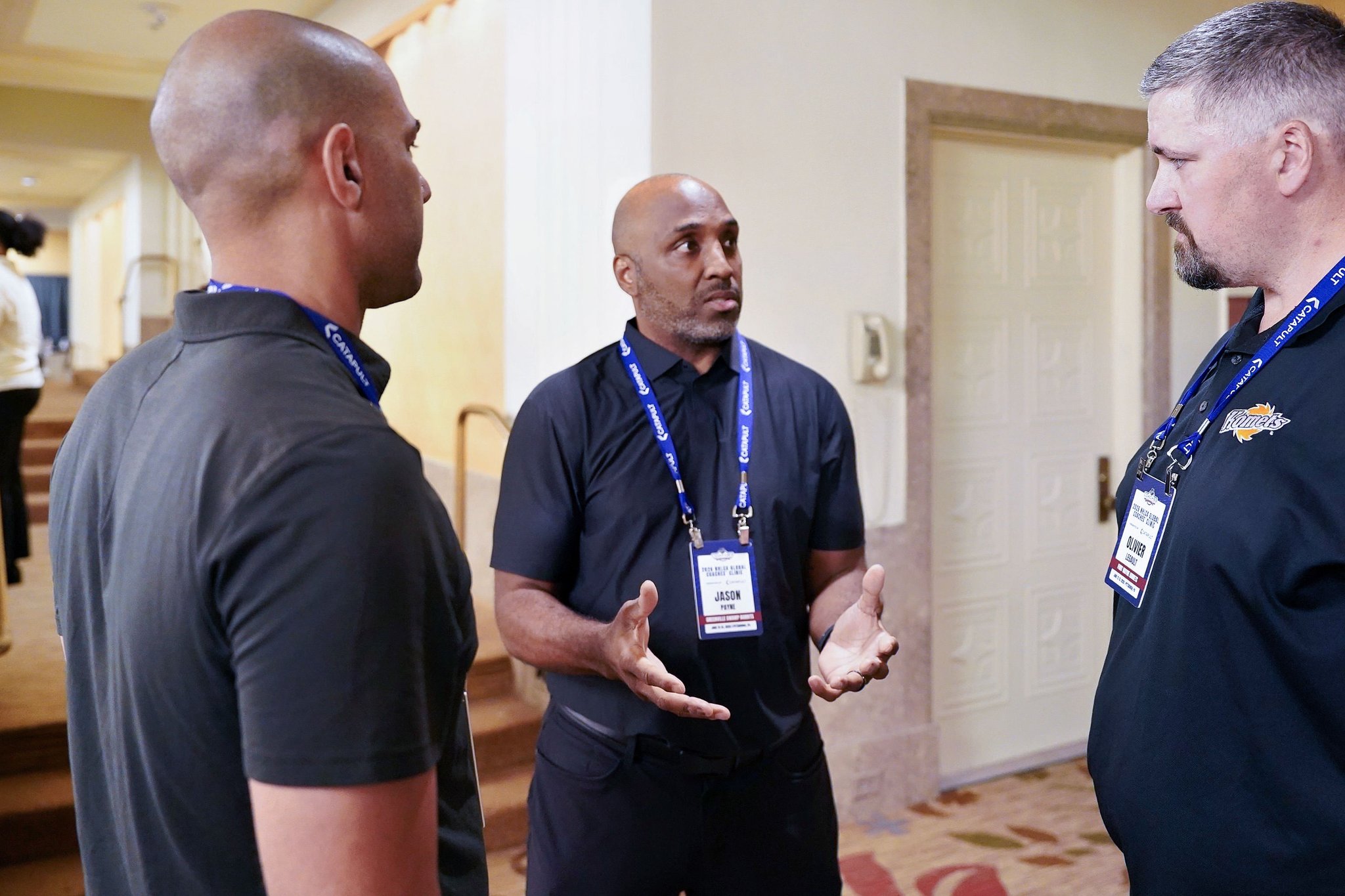
Photo: Jason Payne, Associate Coach, Green Bay Gamblers, and NHLCA BIPOC Coaches Program member.
“It’s a great opportunity for fellow coaches across the globe to get together and reconnect. Sometimes you only talk on the phone or via text, but seeing each other face-to-face and comparing notes, reflecting on the season, and discussing ways to improve is important. I always say you’re never too old to be a student,” said Payne.
“The opportunity to meet fellow coaches, bounce ideas off each other, refresh your mindset, refresh your thinking, and sometimes refresh your approach is something I really value. I definitely encourage coaches around the world to enjoy this experience,” Payne added.
The following day, a Breakfast Reception and Networking Luncheon, presented by Spiideo, were woven into the schedule between Small Group Breakout Sessions, giving coaches additional dedicated time to connect with other coaches, follow up on conversations, and start new ones.
Those opportunities to learn and build relationships are among the aspects Alyssa Sleasman, Assistant Coach of the Rochester Jr. Americans, Scouting Consultant for the Minnesota Frost, and NHLCA Female Coaches Program member, values most about attending the Clinic.
“The NHLCA Clinic is one of the highlights of my coaching year,” Sleasman said.
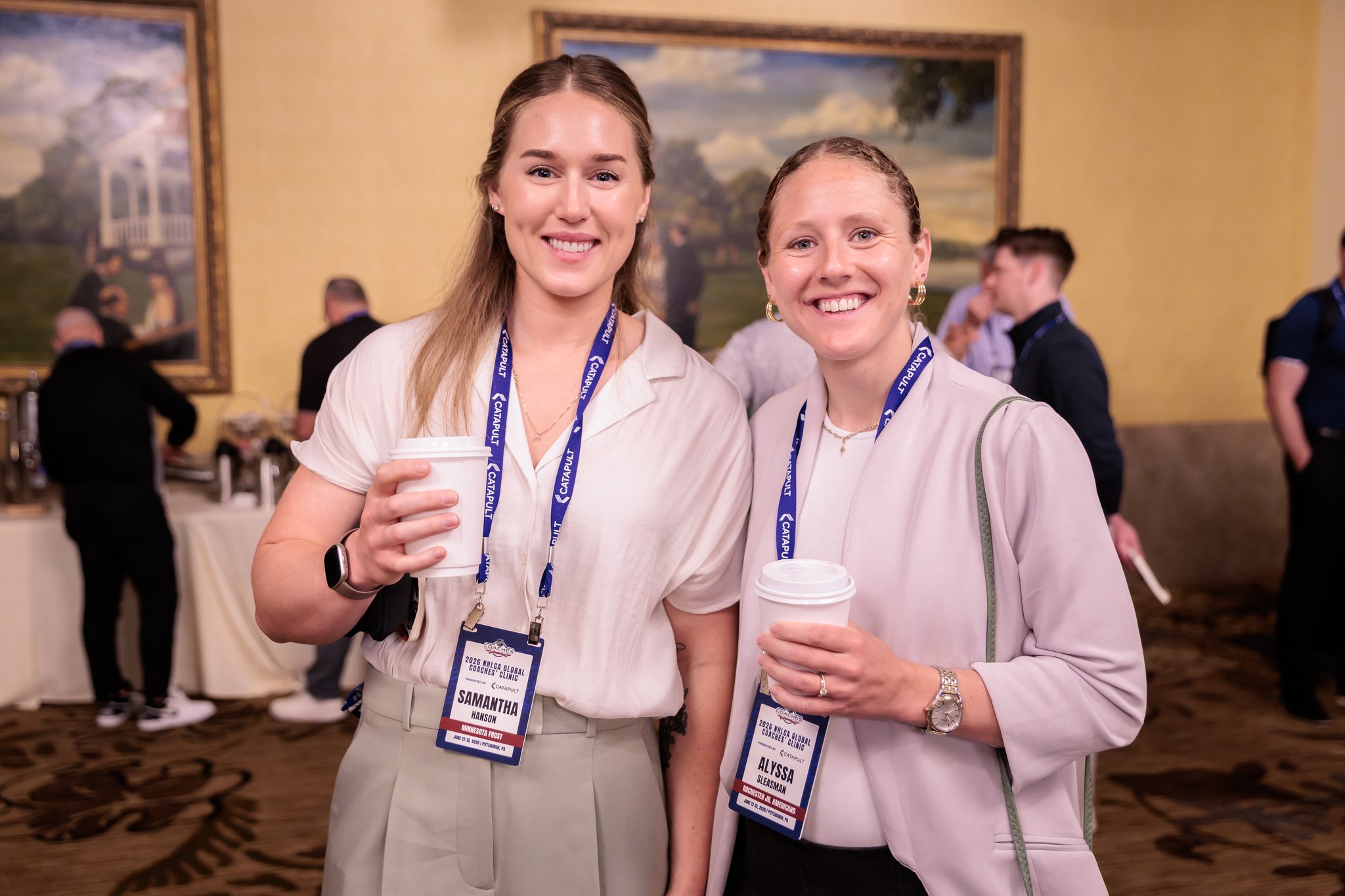
Photo from left to right: Samantha Hanson, Video and Operations Manager, Minnesota Frost; Alyssa Sleasman, Assistant Coach, Rochester Jr. Americans; Scouting Consultant, Minnesota Frost; NHLCA Female Coaches Program member.
“It provides a unique opportunity to learn from some of the best hockey minds in the world while building lasting relationships with coaches from across the game. Every year, I leave with new ideas, fresh perspectives, and renewed motivation to become a better coach. The culture of collaboration and willingness to share knowledge is unmatched, making it an invaluable experience for anyone committed to growing in the profession,” Sleasman added.
The hockey world is both tight-knit and welcoming, and those qualities were on full display throughout the two days in Pittsburgh. That spirit of generosity was evident throughout the Clinic, particularly among the NHL Coaches who shared their experiences and answered questions.
“I’m always honoured to participate,” said Michael Peca, Assistant Coach of the Chicago Blackhawks.
For Seth Appert, Assistant Coach of the Buffalo Sabres, participating in the Clinic is more than presenting or leading a breakout session. “I’ve always felt it is our responsibility to give back to our great game,” said Appert.
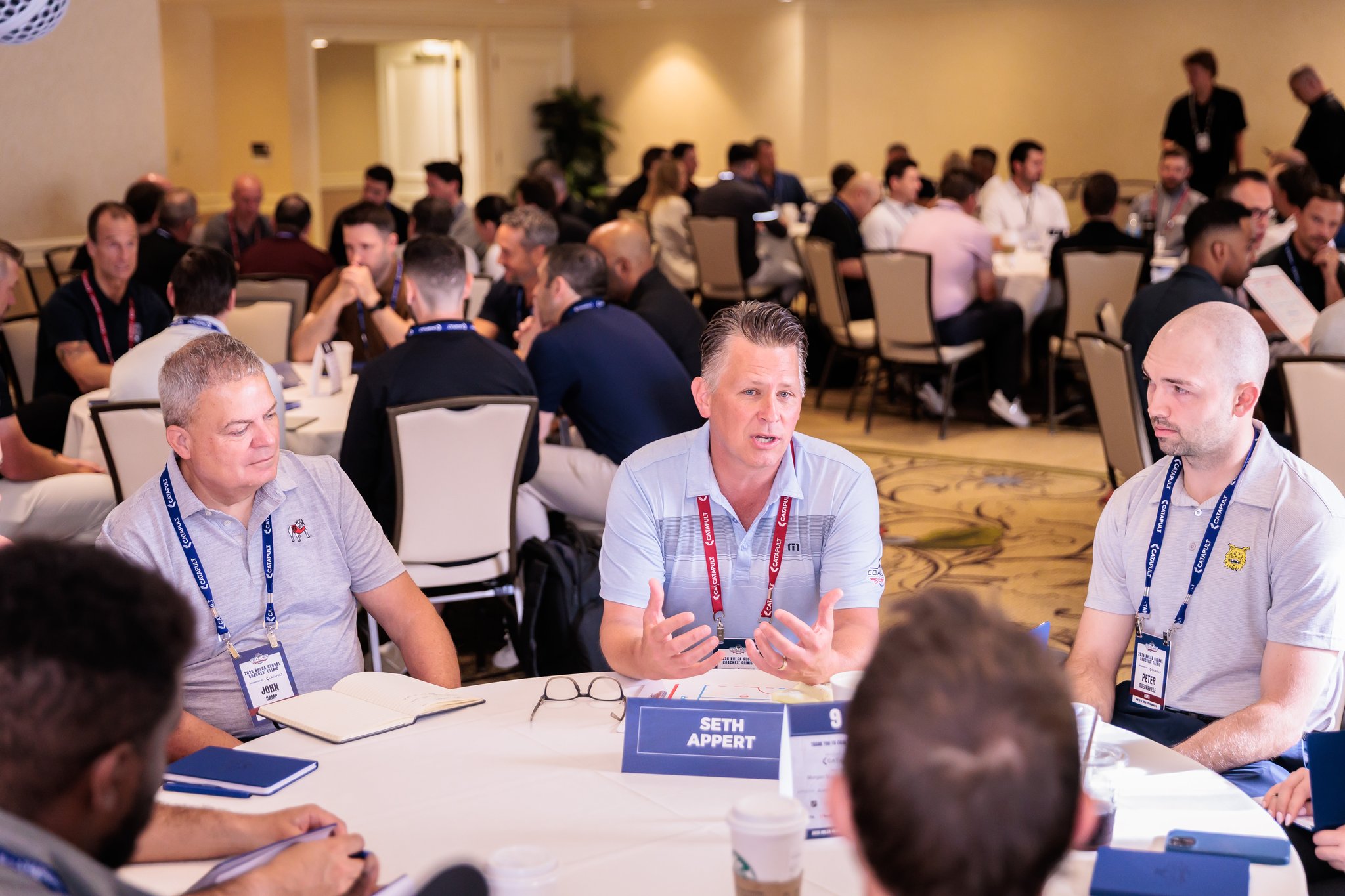
Photo: Seth Appert, Assistant Coach, Buffalo Sabres
“This game has given so much to all of our lives,” Appert added. “Helping coaches from all over the world, at all levels of hockey, can hopefully keep making our game more joyful for our young athletes.”
Throughout both components of the Clinic, attendees engaged with our partners through in-person and virtual exhibitor booths. These interactions gave coaches an opportunity to explore the latest tools, technologies, and resources being used across the game while connecting directly with the people behind them.
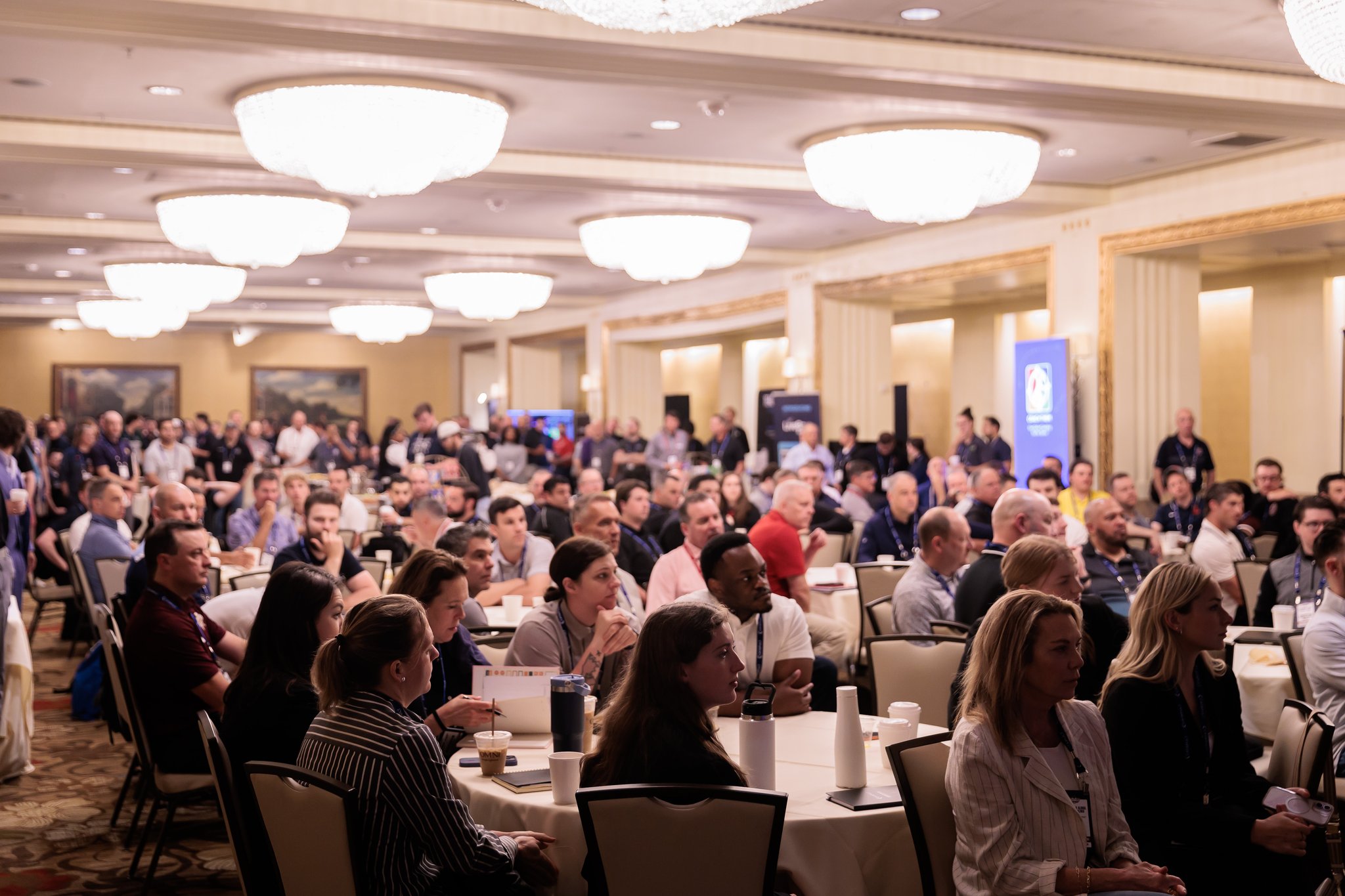
Photo: 2026 NHLCA Global Coaches’ Clinic
The NHLCA is grateful to our Presenting Sponsor, Catapult, our Gold Sponsors Morgan Stanley and Spiideo, Silver Sponsors Apollo Global Management, Ares Management, Bauer, Fanatics, and IHS, Bronze Sponsors Aird & Berlis, CoachThem, the NHL, Teamworks x Sportlogiq, and Exhibitors Deloitte, Hudl, Just Play, LiveBarn, and Surmesur for their partnership and continued investment in the coaching community.
Their support made this Clinic possible, and their commitment to the profession reflects the same belief that brought more than 700 coaches together this June: that the game is better when the people who coach it never stop growing.
Not only did coaches leave with stronger connections and access to mentorship, but with new systems, tactics, and drills to take back to their teams and put to work next season. That is what the Clinic is designed to do, and that is why coaches keep coming back.
Recent Comments